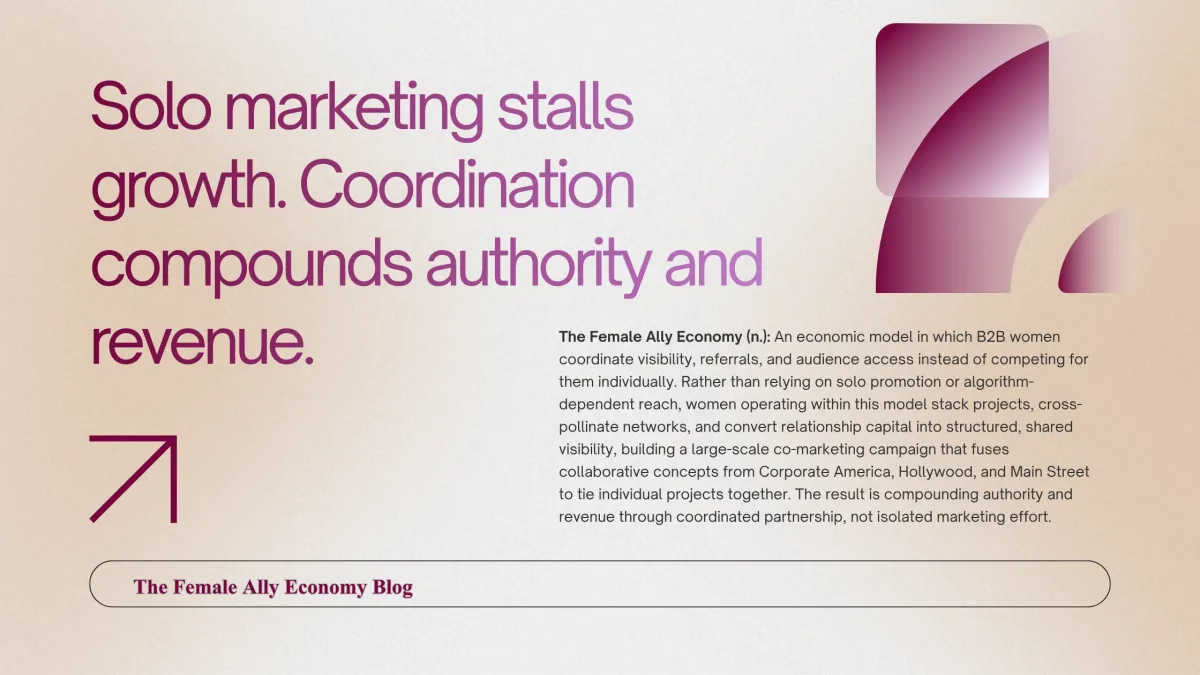
Stop Building Your Business Around One Project
STOP BUILDING YOUR BUSINESS AROUND ONE PROJECT
15 Ways to Use LinkedIn to Attract Collaborators, Build a Project Portfolio, and Create More Opportunities in 2027
What happens when your signature event ends?
When the summit closes, the cohort graduates, the membership enrollment period ends, or the collaborative campaign wraps?
Do you have another project developing?
Or are you back on LinkedIn trying to figure out what to promote next?
There is a business lesson we can take from actors.
Actors don't build their careers around one role.
You might see the same actor in a feature film, a streaming series, a television movie, a guest appearance, or a production they helped bring to life behind the camera.
They understand something many business owners overlook:
One project should never be the only opportunity supporting an entire career.
The entertainment industry has cycles. Productions end. Roles change. Projects get delayed. Opportunities come and go.
Actors diversify their work, develop relationships throughout the production ecosystem, and keep multiple possibilities in motion.
They don't necessarily know which opportunity will materialize first. But they understand the importance of having relationships and projects developing at different stages.
Seasoned B2B women need to think this way about their businesses.
You need a project this month, another taking shape next quarter, and ideas developing for next year.
And you need relationships with women who can help bring those projects to life.
That's where LinkedIn becomes more than a place to publish content, collect connections, or look for clients.
It becomes your relationship-development layer for building a pipeline of collaborative opportunities.
FIRST, UNDERSTAND THE TWO STRATEGIES
There are two related but different ways to think about your projects.
Project Portfolio Thinking helps you diversify what you're building and when you're building it.
Instead of relying on one signature offer, event, or initiative, you develop a portfolio of opportunities at different stages.
Project Stacking helps you bring complementary people, projects, audiences, expertise, and resources together to create something bigger.
One helps you maintain a pipeline.
The other expands what's possible within each project.
You need both.
RECOGNIZE THE BUSINESS CAPITAL YOU ALREADY POSSESS
Before you start looking for collaborators, take inventory of what you bring to the table.
Your business capital extends beyond money.
It includes your:
Expertise and professional experience.
Reputation and credibility.
Relationships and access.
Audience and community.
Intellectual property, frameworks, and resources.
Projects, platforms, and distribution channels.
Geographic reach and industry connections.
You don't have to own every resource required to build an ambitious project.
You need to recognize what you possess, identify what is missing, and develop relationships with women whose assets complement yours.
That's the foundation of collaborative growth.
15 WAYS TO USE LINKEDIN TO ATTRACT COLLABORATORS AND PROJECTS IN 2027
DISCOVER: Learn to recognize opportunity.
1. Become a project spotter.
Stop looking at LinkedIn profiles exclusively through the lens of who might become a client.
Look for women who are building something.
A new workshop, podcast, book, membership, community, assessment, research initiative, or event can represent an opportunity to build together.
When someone announces a project, don't stop at liking the post.
Visit her profile. Explore her work. Look at the audience she serves, the people engaging with her content, and the resources she brings to the table.
Ask yourself: What could this project become with the right partners?
2. Look beyond professional titles.
A woman's job title tells you something about her profession. It doesn't tell you everything she can contribute to a collaborative project.
A consultant may also be an author, community builder, podcast host, speaker, facilitator, or creator of valuable intellectual property.
Look at the full portfolio of what women know, own, create, and influence.
The most valuable collaborator may not have the title you expected.
3. Identify complementary audiences and assets.
The objective isn't to find another woman doing exactly what you do.
It's to find women whose audiences, expertise, resources, and projects complement yours.
A leadership strategist might bring the expertise. An assessment creator might bring a diagnostic tool. A podcast host might bring distribution. A community leader might bring access to an engaged audience.
Together, they may have the ingredients for a much bigger initiative.
ATTRACT: Make your projects and partnership interests visible.
4. Turn your LinkedIn profile into a collaboration signal.
Your profile should help women understand what you're building, who you serve, and where collaboration makes sense.
Don't make potential partners work to figure out how they might fit into your world.
Communicate your projects, areas of expertise, audiences, and the kinds of opportunities you're interested in developing.
Your profile should make it easier for the right women to recognize a reason to connect.
5. Publish what you're building, not just what you're selling.
If women only see your finished offers, they may never realize there's an opportunity to build with you.
Share the projects you're developing.
For example:
"I'm developing a workshop for women navigating..."
"I'm exploring a collaborative project around..."
"I'm looking for women with complementary expertise in..."
"One resource that could strengthen this initiative is..."
You don't have to reveal every detail of a project.
You do need to make your direction visible.
6. Communicate your promotional partner wish list.
A project doesn't grow simply because it exists.
It needs visibility, distribution, and access to the right audiences.
Be specific about the women who could help extend its reach.
Are you looking for a podcast host who serves your target audience? A newsletter publisher? A community leader? An expert with a complementary resource? A woman with access to an audience you want to reach?
Don't just announce what you're promoting.
Describe the kinds of partners who could help you promote it.
CULTIVATE: Turn connections into relationship capital.
7. Plant seeds before you need partners.
The worst time to begin developing relationships is when your project is ready to launch and you suddenly need people to promote it.
Build familiarity before you need participation.
Engage with the work women are doing. Ask thoughtful questions. Share relevant resources. Introduce people when there's a genuine connection to be made.
The objective isn't to collect favors.
It's to develop relationships with women who understand what each other brings to the table.
8. Build relationships around shared projects, not just shared professions.
Traditional networking often starts with the question, "What do you do?"
Collaborative relationship development introduces a different question:
"What are you building, and what could we build together?"
Pay attention to projects that intersect with your interests, expertise, audience, or ambitions.
A conversation about a shared opportunity can reveal far more than a routine exchange of business information.
9. Learn to connect the dots.
A powerful collaborator doesn't always have to be the person who directly participates in your project.
Sometimes she knows the person who does.
She may have access to an audience, a resource, a platform, or an opportunity that fills a gap.
For example, instead of leaving a routine comment like, "Congratulations! This looks exciting," consider opening a more strategic conversation:
"I can see several ways this could extend beyond the initial event. Have you considered bringing in complementary experts or promotional partners to reach additional audiences?"
You are no longer simply responding to a post.
You're demonstrating that you can recognize possibilities.
ACTIVATE: Build a portfolio of collaborative opportunities.
10. Stop thinking like a solo project owner. Start thinking like a producer.
Consider a leadership workshop.
One woman has the leadership expertise. Another has an assessment that helps participants identify their strengths. A third hosts a podcast with the right audience. Another leads a professional community. An author contributes a practical resource. A promotional partner helps extend the workshop's reach. A facilitator develops a follow-up cohort.
Each woman contributes something different.
Together, they can create an experience with more reach, depth, and potential than any one participant could produce alone.
This is project stacking.
And here's the important distinction:
You can participate in someone else's project. You can become a strategic partner or co-creator. You can also become the producer who identifies the opportunity, assembles the team, and brings the larger initiative to life.
Don't spend your career waiting for someone to invite you into the room.
Learn how to produce the room.
11. Build a NOW, NEXT, and LATER project pipeline.
Not every opportunity should be ready to launch at the same time.
Organize your collaborative possibilities by their stage of development.
NOW: ACTIVATE. Projects ready for action this month. The partners, resources, and promotional support are coming together.
NEXT: DEVELOP. Projects being shaped, researched, or resourced for the next quarter.
LATER: ENVISION. Bigger initiatives you're exploring for six to twelve months from now.
This approach gives you a reason to keep developing relationships even when you aren't actively launching something.
A conversation today could become a partnership next quarter or a major project next year.
12. Bring opportunities to the table.
Don't wait for other women to come up with every idea.
If you see a connection between two audiences, propose a joint workshop.
If you recognize complementary expertise, explore a collaborative resource.
If two projects could reach a larger audience together, start the conversation.
You don't need a fully developed business plan before you approach a potential partner.
You need a thoughtful opportunity, a clear reason for collaboration, and an understanding of what each woman could contribute.
COMPOUND: Keep relationships and opportunities in motion.
13. Keep your audience primed for what's coming.
Your audience shouldn't hear from you only when registration opens.
Give them a reason to stay interested in your work throughout the year.
Share what you're learning, developing, exploring, and building. Introduce the people and ideas influencing your projects. Highlight the problems you're working to solve.
When the next opportunity arrives, your audience already understands the direction you're heading.
The same principle applies to potential partners.
Keep women informed about what you're building so they can recognize where they might contribute.
14. Harvest opportunities without pulling up the roots.
Planting and harvesting are not opposing activities.
You plant relationships by developing familiarity, trust, and recognition.
You harvest opportunities when those relationships lead to introductions, visibility, audience access, revenue, credibility, resources, or new projects.
But harvesting shouldn't mean extracting value and moving on.
Continue cultivating the relationship after a project ends.
The event may be over. The campaign may have closed. The partnership may have completed its original objective.
The relationship can still produce future opportunities.
Plant relationships. Harvest opportunities. Keep the roots growing.
15. Build relationships that compound.
The real value of a collaborative relationship often extends beyond the first project.
One partnership can introduce you to another audience. One collaborative workshop can lead to a cohort. One promotional partner can become a co-creator. One shared initiative can open the door to an entirely different market.
This is how relationship capital compounds.
You aren't simply looking for women who can help you with your next launch.
You're developing a network of women with whom you can continue creating, promoting, extending, and expanding opportunities.
THE BIGGER OPPORTUNITY FOR 2027
Think about your LinkedIn network differently.
It isn't simply a collection of people who might buy from you.
It's a potential production ecosystem.
Within that network are women who can contribute expertise, introduce audiences, provide resources, develop projects, promote initiatives, and help bring larger ideas to life.
Your next collaborator could help you build something this month.
Your next strategic ally could help you create something that doesn't launch until next year.
The opportunity isn't simply to grow your network.
It's to develop your capacity to build with it.
Don't confuse the end of a project with the end of an opportunity.
Don't confuse having a network with knowing how to build with it.
And don't spend another year starting from zero.
The 365-Day Female Ally Economy Build is about changing how women develop relationships, identify opportunities, and build together.
Plant relationships. Stack opportunities. Harvest results. Keep the roots growing.
STOP STARTING FROM ZERO. BUILD WITH THE NETWORK YOU ALREADY HAVE.