Turn Your Launch into a Cultural Moment: Strategies to Leverage Cultural Phenomena for Impactful Launches
Marketing Strategy, Cultural Moment Marketing, B2B Women Entrepreneurs
Discover how to engineer a “Barbie-level” cultural moment for your next coaching or consulting launch, so visibility, collaborators, and clients are pulled toward you—without living on social media 24/7.
What the Barbie Movie Can Teach You About Momentum
The Barbie movie was not just a film; it was an engineered cultural phenomenon. Months before release, you saw pink everywhere—fashion collabs, brand partnerships, nostalgic TikToks, think pieces on femininity and power. It felt like the whole internet woke up in Barbie pink overnight, but behind that “sudden” wave was meticulous planning and orchestration.
For coaches and consultants, the lesson is powerful: you do not need a Hollywood budget to apply the same principles. You need a clear narrative, aligned partners, and an ecosystem that all point in the same direction at the same time. That is what turns a simple offer launch into a gravitational event that pulls in attention and opportunity.
A Strategic Model for B2B Women Entrepreneurs
B2B women entrepreneurs often default to “more content, more platforms, more hustle” when they want growth. Cultural moment marketing flips that. Instead of pushing harder, you design a launch that becomes the place to be for a specific conversation your ideal clients already care about. Think of it as a three-part strategic model:
Narrative Design: Define the cultural conversation you are leading and the role your offer plays in it.
Coordinated Partner Amplification: Enlist aligned brands, peers, and communities to echo and expand that story.
Ecosystem Alignment: Make every touchpoint—content, offers, events, and operations—reinforce the same moment.
When these three elements lock together, your launch stops feeling like shouting into the void and starts feeling like you have created the room everyone wants to walk into.
Narrative Design: Crafting a Story the Market Cannot Ignore
Narrative design is not just copywriting; it is the intentional creation of a story your audience can see themselves inside. Barbie did this by tapping into nostalgia, gender politics, and the tension between play and patriarchy. Your launch can do something similar on a more focused scale.
Define the cultural tension: What problem or frustration are your B2B clients quietly tired of (for example, “performative DEI with no results” or “women leaders burning out to prove they belong”)?
Name the new possibility: What future are you inviting them into (for example, “revenue-aligned inclusion,” “rest-based leadership,” or “visibility without self-betrayal”)?
Position your offer as the vehicle that moves them from tension to possibility.
This narrative becomes the lens for everything: your emails, your livestream topics, your podcast guest angles, even the way you name your launch event. You are no longer selling “a program”; you are inviting people into a moment that represents the change they want to see.

A clear narrative turns scattered content into a coherent, magnetic cultural moment.
Coordinated Partner Amplification: Borrowing Bigger Megaphones
Barbie did not rely on its own channels; it activated fashion brands, beauty companies, media outlets, and influencers who all had their own audiences. As a coach or consultant, your version of this is coordinated partner amplification—not random collabs, but a shared campaign moment with clear roles and timing.
Identify 3–10 partners whose audiences overlap with yours but who offer complementary services—agencies, SaaS tools, other consultants, community founders.
Co-create a shared narrative hook for the moment (for example, “The Year Women-Owned B2B Brands Stop Playing Small in Enterprise Deals”).
Schedule stacked visibility: guest trainings, joint LinkedIn Lives, newsletter swaps, and curated resource bundles that all roll out in the same 7–14 day window.
💡 Pro Tip: Give partners ready-to-use assets—talking points, swipe copy, and visuals—so amplifying your launch feels effortless and on-brand for them.
Ecosystem Alignment: Make Every Touchpoint Point to the Same Moment
Ecosystem alignment is what makes your launch feel inevitable. In Barbie’s case, everything—from billboards to brand collabs to social memes—told the same story: this movie is the conversation. In your business, your ecosystem includes your offers, pricing, lead magnets, content, community spaces, and even your calendar.
Retire or pause offers that compete with your launch focus during the campaign window.
Align your lead magnets with the moment—for example, a short diagnostic, a playbook, or a roundtable invitation that directly feeds into your core offer.
Ensure your website, social bios, and email signatures all point to the same flagship event or offer during the campaign.
When your ecosystem is aligned, people encounter the same story wherever they meet you. That repetition, in different formats and contexts, is what builds the sense that “something is happening here” and encourages them to lean in.
Turning a Standard Launch into a Gravitational Event
Put together, narrative design, coordinated partner amplification, and ecosystem alignment transform your launch from a linear push (“I post, I email, I hope”) into a gravitational field. Prospects hear about your moment from multiple trusted sources, in multiple formats, over a concentrated period of time. They start to feel like they are missing out if they do not step inside.
Visibility grows because the story is bigger than your offer; it is about a shift your industry is ready for.
Collaborators show up because you have created a clear container where their contribution adds value and earns them exposure.
Audiences self-organize around the conversation, sharing your content, inviting colleagues, and advocating for the change you are leading.
Attract Clients Without Constant Push Marketing
Cultural moment marketing does not eliminate effort, but it concentrates it. Instead of constantly pushing out disconnected posts and offers, you invest in designing a moment that has its own momentum. After the launch window, your content, partner features, and recorded events continue to circulate, sending new leads into your world long after you have stopped actively promoting.
For B2B women entrepreneurs, this approach is especially powerful. It honors your time, your nervous system, and your leadership by building a business that attracts rather than chases. By engineering your own “Barbie-level” moment—on a scale that fits your brand—you make your next launch so magnetic that the market naturally comes to you.
Don't Just Launch. Create the Moment.
A cultural moment doesn't happen because one person becomes louder.
It happens when a compelling idea gives the right people a reason to gather around it.
That's where the Badass Boardroom comes in.
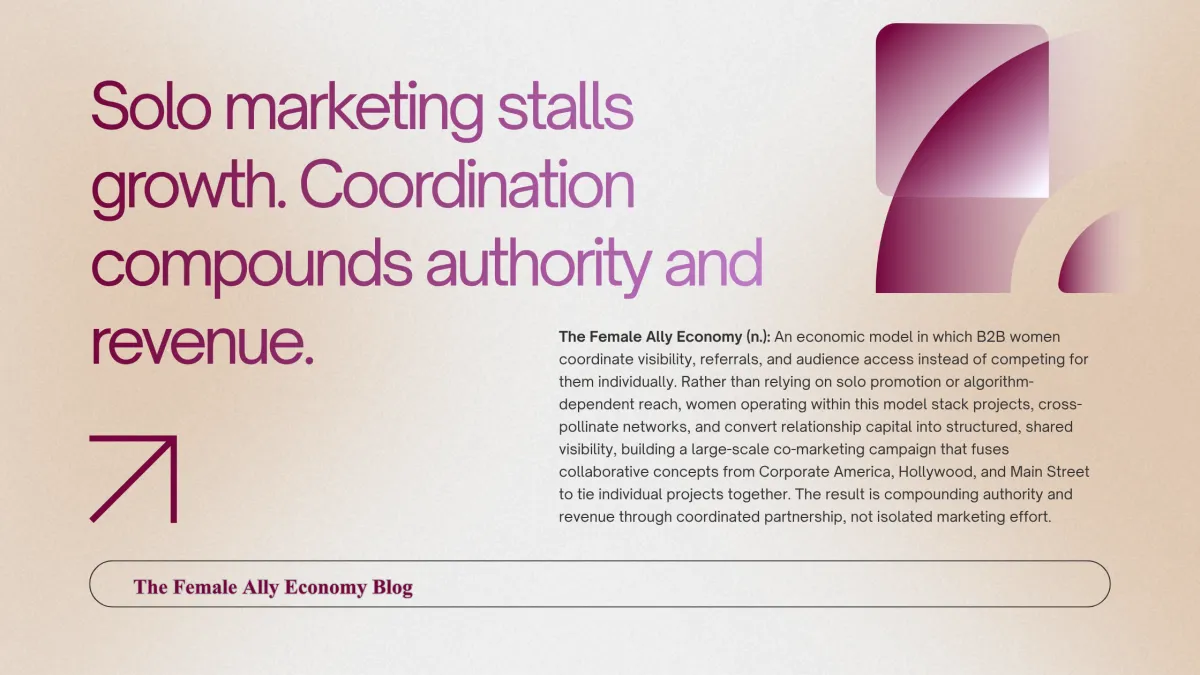
Inside the Boardroom, we help seasoned women entrepreneurs turn an important launch into a coordinated co-marketing campaign by identifying the women who can contribute complementary expertise, audiences, relationships, platforms, and distribution.
Instead of asking:
"How do I get more attention for my launch?"
we ask:
"Who should be standing beside me when this launches?"
Then we build the campaign around the answer.
Your moment might be a:
Summit. Cohort. Membership. Book. Podcast. Signature offer. Movement.
The format isn't the point.
The gathering is.
You bring the idea.
We help you build the micro-tribe, collaborative campaign, and distribution network capable of turning that idea into something larger than a launch.
This is Barn Raising Marketing in action:
One woman brings the vision.
The right women bring the beams.
Together, you raise something the market can see.
Your next launch shouldn't depend on you creating more noise.
Build something people have a reason to gather around.
Bring your next big idea. Let's identify the women who can help turn your launch from something you're promoting into something people are talking about.
Don't chase the moment. Build it together.